Journal: 3rd September 2026
Reflections from a Circular Economy Workshop
Attended and written by Hannah Foreman.
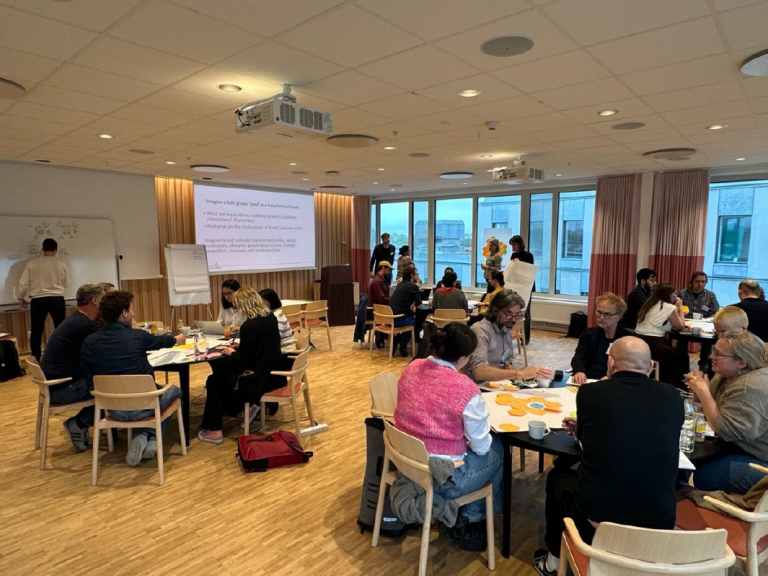
In May, as a representative for BakerBrown, I attended a day-long workshop in Stockholm on the circularity of sand, bringing together people from a wide range of disciplines. Although the starting point was sand as a resource, the conversation quickly expanded into far broader questions about systems, collaboration, and how change actually happens.
It has left me thinking ever since. When discussing a circular economy, it tends to be mostly through the lens of materials, which undeniably play a key role. But the greatest challenge isn’t technical, its social – we need behaviour change. To achieve meaningful change, the solution is also social: how we work together, share knowledge, and create the conditions for change.
Inside the workshop
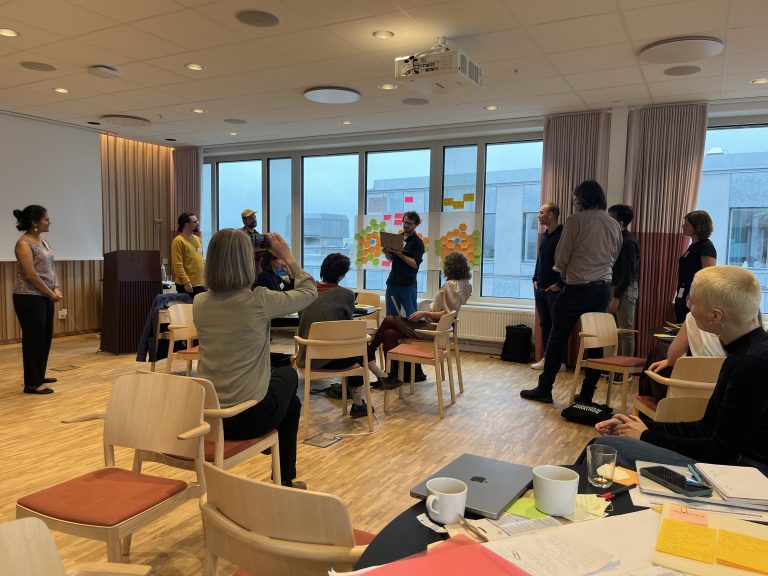
The workshop was organised by Kiran Pereira Capelli, PhD candidate at the Stockholm Resilience Centre and founder of sandstories.org, and brought together an accomplished mix of professionals and academics: policy analysts and advisors, architects, designers, scientists, researchers, and more. Some attended as individuals, others represented organisations such as Lengader, the Coalition for Responsible Sand and Silicates, and BakerBrown itself.
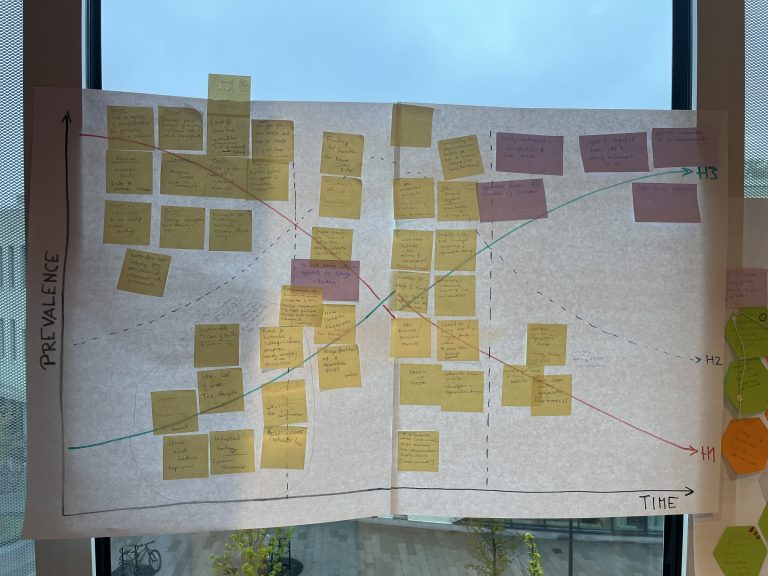
The day began with introductions, seated at tables deliberately mixed to encourage conversation across disciplines. The morning combined the Seeds of Good Anthropocenes framework with Future Wheels, exploring pre-selected "seeds" (an idea or prototype in operation but not yet mainstream) centred on future sand solutions and other emerging ideas. Participants mapped each seed's direct and indirect impacts before drawing out the wider themes connecting them. The afternoon followed the Three Horizons framework, mapping a pathway between the future envisioned that morning and the present moment. The day concluded with a light-hearted, visionary storyboarding exercise. More about the different methodologies can be found here.
Several things have stayed with me since: the gap between discussing circularity and implementing it, how solutions are always about people and collaboration, and the recognition that we cannot afford to wait for others to act.
In-between utopia and dystopia
It is easy to feel like we live in a dystopian reality, deflated by the scale of the challenges we face. It is just as easy to imagine an idealistic, visionary future. But what about the gritty reality that sits somewhere in the middle? Between the ‘dystopia’ of today and the utopia of tomorrow? How do we actually get there?
You can see this dynamic play out at international level in the COP negotiations, where reaching agreement is hard enough, let alone converting that it into actionable outcomes. The Three Horizons framework does well to begin to address this, collaborating between different types of people allows you to brainstorm solutions. After all collaboration between people is the key to change. But this is only the first step on the staircase. It’s really about the successful implementation of these targets – talking can only get you so far.
The gap between talking and doing
Throughout the workshop, I was reminded of the persistent gap between imagining better systems and actually building them. The hardest task, and the one that ultimately matters, is translating those ideas into practice. For those of us UK built environment professionals, that means contending with a plethora of issues, such as a 20% VAT for work on existing homes whereas building new homes are VAT free, or the insurance and certification barriers around reused materials, or the understandable reluctance of clients, contractors and consultants to depart from the status quo.
But what’s holding us back isn’t a shortage of solutions. They already exist – we know what they are and people are continuously finding out more – Kiran’s PhD into sand circularity for one.
There are far fewer people out there putting these solutions into practice and enacting change. And it’s hard, it is risky, but we need to do it. It is now where most of our energy is needed. But the space is also oversaturated, everyone wants to create their own and put their own mark on it. We’re in a crisis of talking sustainability, with so many skirting the real, gritty, get your hands dirty, part – the doing.
At Baker-Brown, we are fortunate enough to work with people who are willing to take risks with us and push things further, and we have been able to demonstrate that this can work successfully in practice. But that is not simply luck. Duncan and the team have worked incredibly hard to build the BakerBrown brand and push each project, so that now people recognise us and increasingly come to us specifically because they want to pursue more ethical and sustainable ways of building.
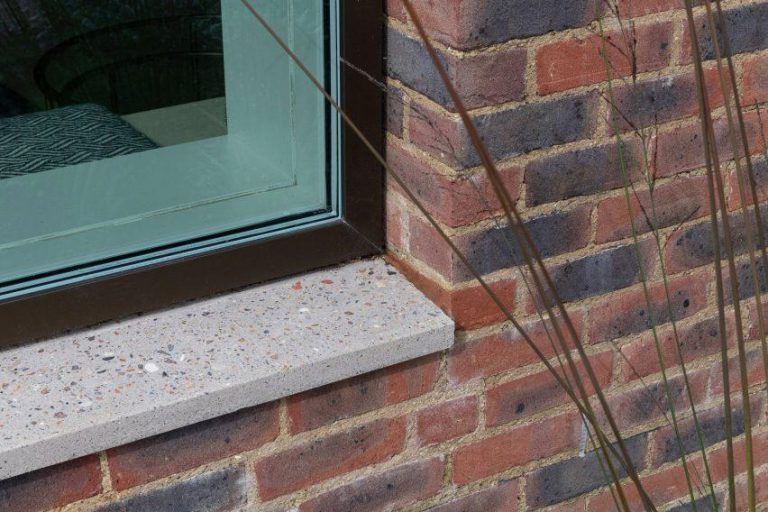
Our recently completed South Downs House is a great example of this coming together: a project where we focussed on harvesting materials already on site to construct the new building. Concrete and bricks from the previous house that had burnt down were recycled to create window cills and coping stones. Ash Die Back, originally salvaged for a project with Glyndebourne Opera, was utilised to create the glue-laminated timber structure together with a three-storey staircase. Chalk and clay from site were mixed to form a variety of beautiful plaster finishes for the interior spaces. Bricks, bound together with lime-based mortar, were sourced from less than 4 miles away.
None of this happened by accident, and the project winning a RIBA Award proves not only that it should be done, but we are still doing it far too rarely. It should be the norm.
Solutions come from people
So how do we decrease this gap between talking and doing? Collaboration.
If the workshop reminded me of one thing, it's how much strength there is in simply getting people together. Pulling off the workshop with the amount of impressive people in the room was a feat in itself. I met people doing brilliant, important work, all driven by a genuine will to create the change we need. That's what really moves things forward: people who are driven enough, and willing enough, to take the risk.
But on our own we can only do so much. Enacting change is hard and is almost impossible without the cooperation and collaboration of others. This includes including those in the room who do not already think the way we do and ones that ourselves or others might not want there too: the H&Ms and Ikeas of the world, who could – and sometimes are – doing good work. If we only collaborate with people who already agree with us, we limit the possibilities for change.
And we’re starting to see this change. I saw this first-hand when I worked as part of Recollective, trying to save virtually new – but still 'used' – timber, bound for the skip yard. Working to try to create a system around the reuse of timber, rather than an individual reclamation yard, was heavily reliant on the goodwill and cooperation of people across different organisations. People who could have easily shut us out had we not made the effort to work with them, and vice versa for those willing people within. In the end that is what moves things forward.
We can't wait for others
All these people are out there on the ground, doing the work without waiting around for others, or policy, to go first.
In the workshop we talked about the importance of community groups and the people on the ground. We can't rely on governments alone to make the changes needed. Even the UN's own guidance is an agenda, and it's up to nations, and the people within them, to act on it. Yes, the circular economy roadmap from the government is imminent, but we can’t just sit back, waiting for others to fix our problems.
I was reminded of this again just the other week, during a visit to Tipping Points East where I caught up with Freya (previously of ReCollective, now Head of Material Systems at Yes Make, part of Tipping Points East). It was heartening to see that same energy, people driving change and collaborating with each other, operating at a much larger scale. Nobody there is waiting for the right moment, they're just getting on with the work, and in doing so, creating a pathway for everyone else.
BakerBrown's own work offers a similar example. With the Waste House, we didn't wait to see whether it could be done: we pushed ahead and made it happen, as did everyone who worked on the project. Everyone who keeps pushing, who keeps making things happen, helps tip the scales a little further, until practices such as reuse and a circular economy become the status quo rather than the exception.
To takeaway...
If there was one main takeaway from the workshop, it's that the creating a circular economy is as much a matter of relationships as it is of resources. Solutions lie with people working together, sharing knowledge and being willing to try things, rather than waiting for someone else to make the first move.
So what can we do tomorrow? Just do something. Try, and try it with others. Get involved in your local community, start conversations within your own organisation, ask your suppliers about the environmentally friendly option, encourage projects to reuse wherever possible, and encourage people by showing them it can be done. Societal change can only happen when enough people push in the same direction until the scales tip.